Archaeology Projects
When I came to Carleton, I knew that I wanted to study archaeology, and thus my sequence of skill acquisition began. I started with learning practical skills related to archaeology and material culture through courses like Archaeological Methods and The Material World of the Anglo-Saxons. Courses and projects like these introduced me to skills and tools like geospatial analysis, digital mapping, photogrammetry, and more. With these tools and others, I learned different ways to use material culture to study lived experience and attribute meaning to places through physical remains.
Archaeology in the Arb

ARCN246 is a Carleton course known as Archaeological Methods. I have been involved with this course twice. The first was in the spring of 2017 as a student, in which I performed fieldwalking surveys and other methods of archaeological investigation of the Pine Hill Village site located on Carleton’s campus.
My second involvement was in the spring of 2019 as a teaching assistant, during which time I collected and helped students process DGPS information of the Waterford Mill site, located within the Carleton arboretum.
Eriswell Girdle-Hanger Reconstruction

I participated in The Material World of the Anglo-Saxons course in the spring of 2018. The course was designed to study early medieval England through material engagement.
My main project in this course was the creation of a wooden reconstruction of the bronze girdle-hangers found in Little Eriswell. The process was meant to help in my understanding of early medieval makers by engaging in the same creation processes encoded in the object itself.
Historical Projects
During the course of acquiring these skills and tools, mapping became of particular interest to me. I began to gravitate toward projects that would allow me to use those geoanalytical skills in other contexts. I applied the interest that I had in human connection to spaces to more historically-based projects. My interest in spaces started to encompass the intangible stories that were tied to places. It became clear to me that people have always had deep, spiritual connections to places in a lot of different ways besides physical, and these could be studied in different ways, too.
Integrative Exercise (COMPS)

This project, which served as my Carleton senior thesis, focused on my research of popular perspectives of the Scottish witch-hunt through unconventional sources. I combined a study of material culture, folklore, and historical documents all converging on the subject of holy wells to engage with popular opinions and attitudes regarding witchcraft and the supernatural.
Witness to the Revolution

This project is a collaborative effort between two Carleton professors and a cadre of students to create a video game that allows players to experience the Boston Massacre based heavily on primary source material.
I performed primary research regarding buildings referenced in depositions from witnesses of the shooting, and compiled the information into annotations that will be integrated into the game.
Deep Mapping
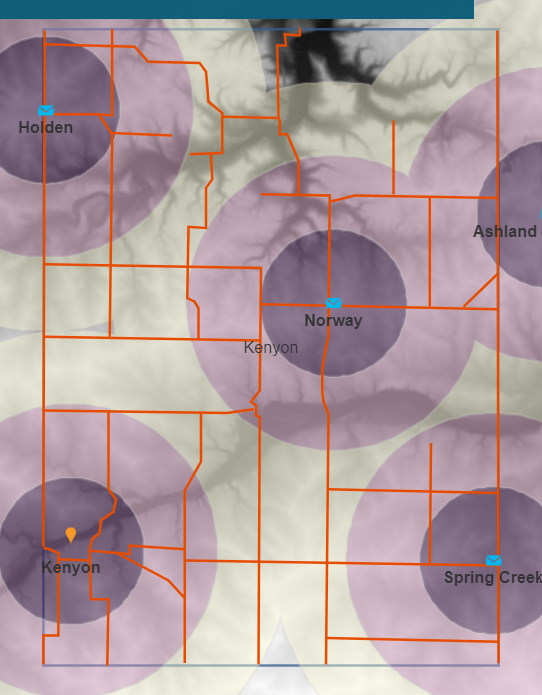
The project involved historical research of the USGS quadrangle encompassing Kenyon, MN. My intent was to create a series of deep maps to portray peoples’ attitudes toward movement and distance through the space in different period in the quadrangle’s early settlement history. The project involved using a variety of sources to go beyond the elements traditionally recorded on cartographic maps.
